
Price a window fitting job by adding the supplied window and consumables, realistic labour, access and waste costs, a contingency for defined risks, business overheads and profit margin. Survey before quoting, state assumptions and exclusions, and separate optional or remedial work so the client can compare a complete scope rather than a headline fitting rate.

Material Costs
Your material cost starts with the window price from your supplier, but that is not the end of the list. A complete cost build-up for a window fitting job should include:
- Window and frame — the trade price from your supplier, including any options (obscure glazing, specific hardware, colour)
- Fixings — frame fixings, packers, and any specialist anchors for the substrate
- Sealants and foam — low-expansion window foam and external silicone; these are consumed per installation and must be costed in
- Cill and trim — internal cill boards, architrave, and any external finishing trim
- Waste disposal — the old frame must go somewhere; skip hire or a trade waste run has a real cost
- Delivery — if your supplier charges for delivery, factor this into the job, not your overheads
Using a trade account with a direct manufacturer gives you consistent pricing that you can plan around. See our guide on setting up a trade account with a window manufacturer for more on how trade pricing works.
Labour Time Estimates by Window Type
Labour is typically the most variable element in a pricing build-up. Realistic time estimates per window (for an experienced joiner working alone, including removal of existing and installation of replacement) are approximately:
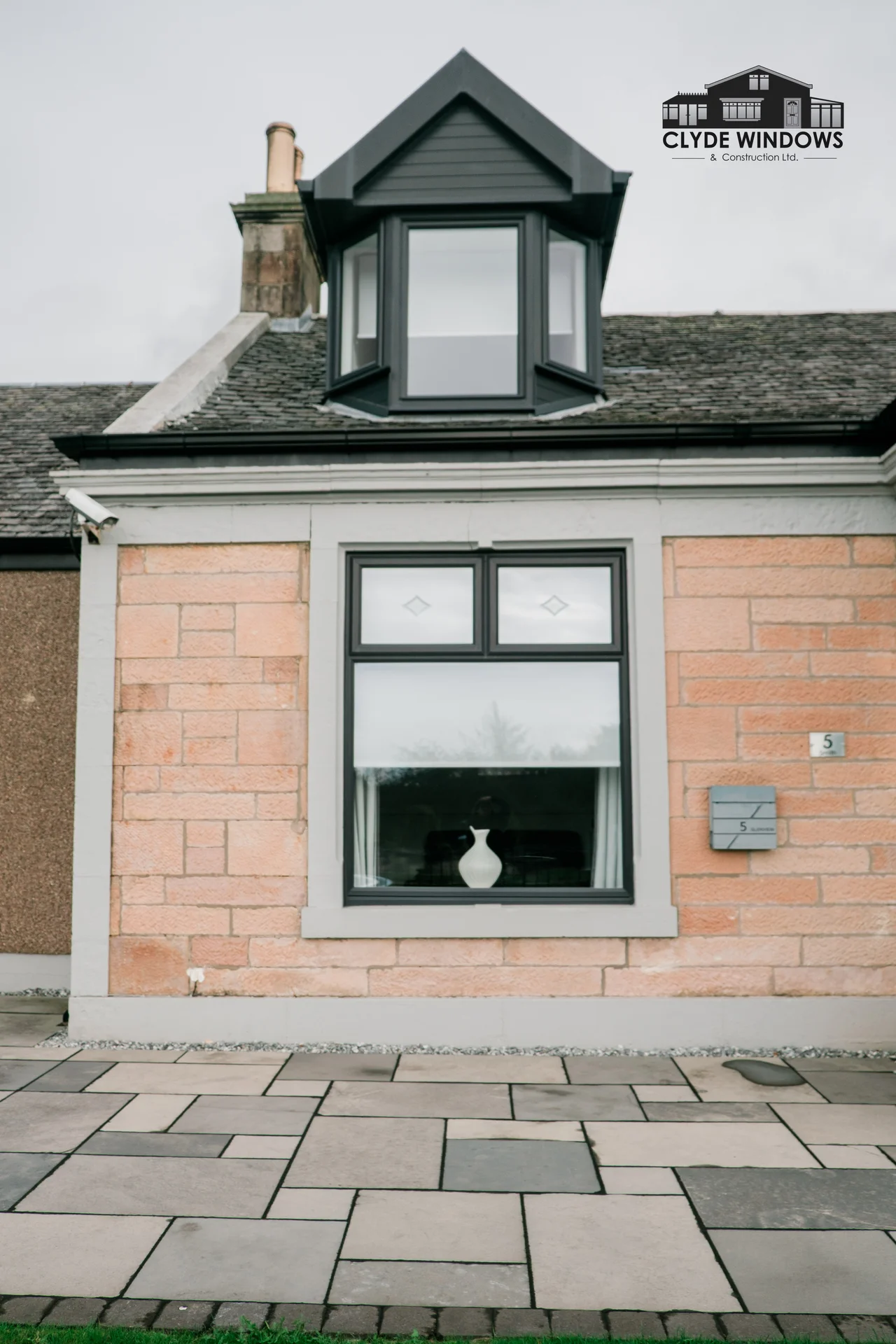
- Standard casement (small to medium) — 1.5 to 2.5 hours (for reference, see Clyde Windows & Construction’s casement window service)
- Large casement or picture window — 2.5 to 4 hours (handling and weight add time)
- Sash window (replacing into existing box) — 2 to 3 hours
- Sash window (full frame replacement) — 3 to 5 hours
- Bay window (3-section) — 6 to 10 hours depending on complexity and bay roof condition
These figures assume straightforward access and no remedial work to the reveal. Add time explicitly for reveal repair, re-plastering, external re-pointing, and any scaffolding or access equipment requirements. For guidance on fitting techniques, see our article on how to fit a casement window.
Overheads and Margin
Your labour rate must cover more than your take-home pay. A self-employed joiner’s effective hourly rate needs to account for:
- National Insurance contributions
- Public liability and professional indemnity insurance
- Van running costs (fuel, insurance, maintenance, depreciation)
- Tool replacement and maintenance
- Non-productive time (quoting, admin, travel to survey)
- Holiday and sick time — you do not earn when you’re not working
HMRC’s guidance on self-employment is a useful starting point for understanding the full cost of trading on your own account. A common mistake is pricing at a day rate that would look reasonable as an employed wage but fails to cover the full cost of self-employment. As a rough guide, your charge-out rate should be at least 1.5× what you need to take home per hour to cover overheads and non-billable time.
Quoting vs Estimating
A quote is a fixed price for a defined scope of work. An estimate is an indicative figure that may change. Most residential clients expect a quote, not an estimate — which means you need to have surveyed the job properly before pricing it, following the same principles set out in BS 8213-4, the British Standard code of practice for window surveying. Never quote from a photograph or a description alone; always visit the site.
Include clear exclusions in your quote: what is not covered, what happens if additional remedial work is found on opening up, and how variations will be priced. A well-written quote protects both you and your client and reduces disputes.
Common Pricing Mistakes
- Forgetting to include waste disposal, sealants, and trim in the material build-up
- Underestimating time on sash and bay work
- Not costing for access — scaffolding on a two-storey extension is a significant addition
- Applying a fixed window count rate without surveying each opening individually
- Pricing material at retail rather than trade cost